
West Bend Directory Collections
The local shelf differs from what the phrase city directory often implies. A National Register nomination for downtown West Bend documents city phone books and expressly says conventional city directories, usually with reverse address sections, are absent. Government-hosted historic-property research identifies two Washington County directory runs in the West Bend Community Memorial Library reference collection. State gazetteers, plat books, maps, and archives fill earlier or specialized gaps.
| Collection | Years | Where Held | Access |
|---|---|---|---|
| West Bend phone books | 1930–1995 documented | Library and historical collections | Ask reference staff for holdings and gaps |
| Johnson Washington County Directories | 1969–1992 | West Bend library reference collection | In person; inspect actual volume fields |
| R.L. Polk Washington County Directories | 1995–2010 | West Bend library reference collection | In person; verify individual years |
| Polk Wisconsin State Gazetteers | 1891–92, 1907–08, 1921 | WHS and historic research references | Business and occupation leads, not full households |
| West Bend Sanborn maps | 1884 digital; other years cited locally | Wisconsin Historical Society | Digital map, original, or microfilm |
| Tower Heritage Center archives | Historic range; runs not cataloged online | 320 S 5th Avenue | Reading room, inquiry, or paid research |
The table records documented spans, not proof that every year survives. Call numbers, gaps, address sections, and page conventions were not available through the inspected web sources. Contact the library before a trip. Treat “city directory” as a search term that may lead staff to a county directory, phone book, gazetteer, plat book, or local-history file.
West Bend's Missing Reverse Directory
The lack of a standard reverse city directory is not a minor gap. A reverse, or criss-cross, section normally lets a researcher start with an address and see the listed name. West Bend's historic nomination says such typical city directories do not exist. The city phone-book run can still connect a listed subscriber or business to a number and address, but it does not include every resident and may be arranged chiefly by name.
Ask the library to inspect each target volume for an address index, street section, residential and business split, abbreviation key, or owner marking. Never describe one of these features as present until a page has been checked. When only an alphabetical listing exists, pair its address with a deed, tax card, newspaper item, obituary, permit, or map. The limitation makes the resulting history more careful, not impossible.
West Bend Library Directory Shelf
The West Bend Community Memorial Library is the practical first contact for local printed runs. Its address is 630 Poplar Street, West Bend, and its reference staff can be reached at 262-335-5151 or reference@westbendlibrary.org. Posted hours are Monday through Thursday 9:00 a.m. to 9:00 p.m., Friday 9:00 a.m. to 6:00 p.m., and Saturday 9:00 a.m. to 1:00 p.m.; Sunday is closed.
Search the Monarch catalog by titles and subjects such as West Bend, Washington County, phone book, city directory, obituary, yearbook, plat, and local history. Catalog holds, interlibrary loan, library computers, telephone, email, and in-person reference help are distinct access channels. A current genealogy database list was not verified, so ask which licensed newspaper or family-history tools are available before relying on them.
The library landing page supplies current contact and catalog routes for checking these holdings.
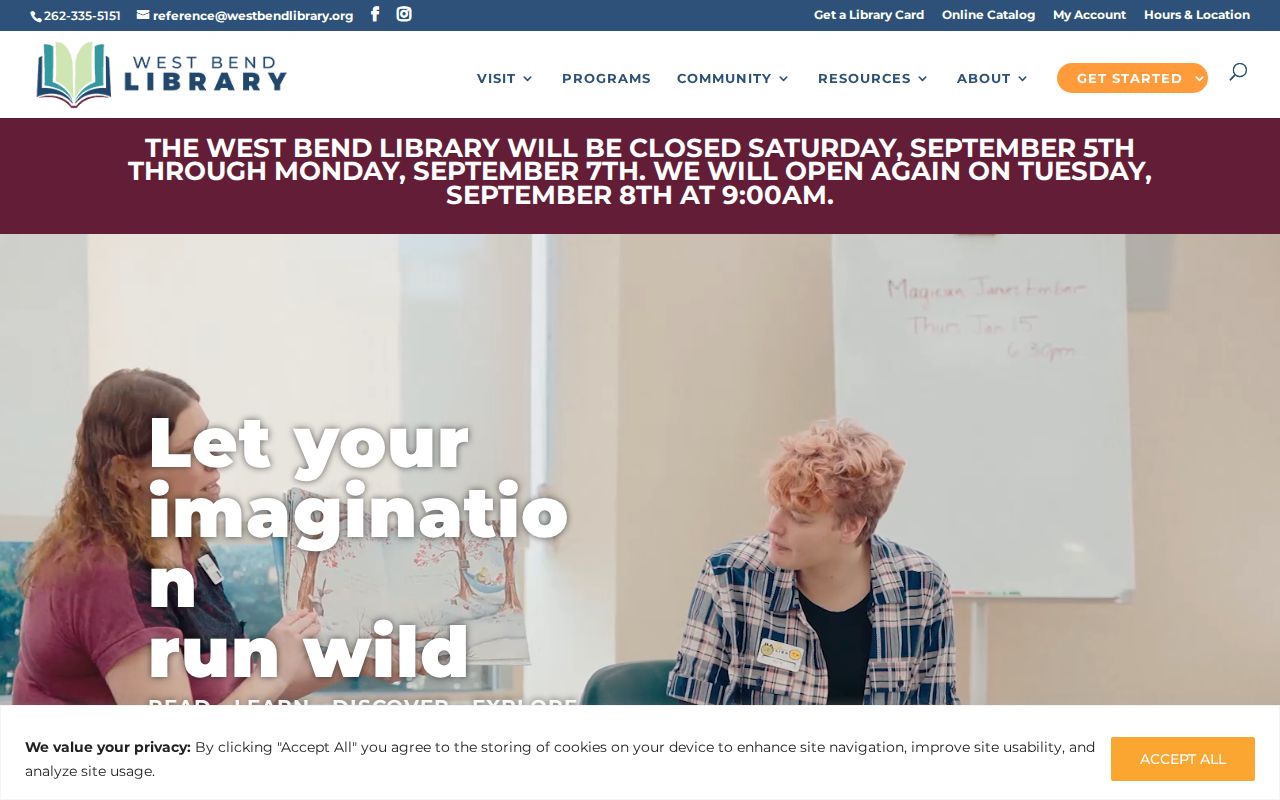
The library screen is the doorway to staff help, not evidence that every historical volume has been digitized.
Read a West Bend Directory Entry
A conventional city directory may show a head of household, spouse, occupation, employer, address, and owner or renter notation. Those fields are useful as an interpretation checklist, but they were not verified on a live page from a West Bend volume. The local evidence that can be stated with confidence is narrower: phone books link listed subscribers or firms to phone and address information, while county directory fields must be read from the actual year.
| Name | Record the exact spelling, initials, and ordering shown. |
|---|---|
| Telephone | A phone-book field tied to a listed subscriber, not every resident. |
| Address | Copy the full printed street form and publication year. |
| Business or occupation | Most useful in gazetteers and business listings; inspect the page. |
| Symbols and abbreviations | Interpret only through the key printed in that volume. |
- Criss-cross directory
- A book or section arranged by street address, rather than only by surname.
- Householder index
- A list centered on people recorded as household heads, which may omit others at the address.
- Abbreviation key
- The volume's own legend for shortened words and symbols. Save it before interpreting an entry.
West Bend Phone Books, 1930–1995
The documented phone-book span is the city's main directory substitute. One concrete historic-property example shows the method: a Wisconsin Historical Society Architecture and History Inventory record used 1949 through 1951 West Bend phone books to identify Peterson Restaurant at 313–315 N Main Street. This ties a named business to a building and a dated source. It does not turn the book into a census of all residents.
For each hit, save the volume year, printed name, phone number, complete address, page, and whether the listing appears residential or commercial. Check adjacent years to see whether the entry persists. A disappearance can mean a move, death, business closure, changed number, unlisted service, or missing volume. Resolve the reason with a newspaper, obituary, deed, permit, tax record, or vital index.
Tower's West Bend Community Archives
Tower Heritage Center holds community directories, church and cemetery records, family histories, probate and obituary material, tax records, newspapers, Sanborn maps, bird's-eye views, business files, and military or fraternal sources. Its archives contain more than 17,000 photographs and 800 cubic feet of documents. The reading room at 320 S 5th Avenue is open Monday and Tuesday from 2:00 to 4:00 p.m.
Reading-room use is free. Tower also lists self-guided preliminary historic-property or genealogy research for $15 and a comprehensive report for $95. Those options differ from the library shelf: a researcher may work directly, send an inquiry, or pay staff for a defined level of research. Ask which directory years, community files, and address indexes apply to the person or block before ordering.
The Tower archive page describes the collection scale and its research choices.
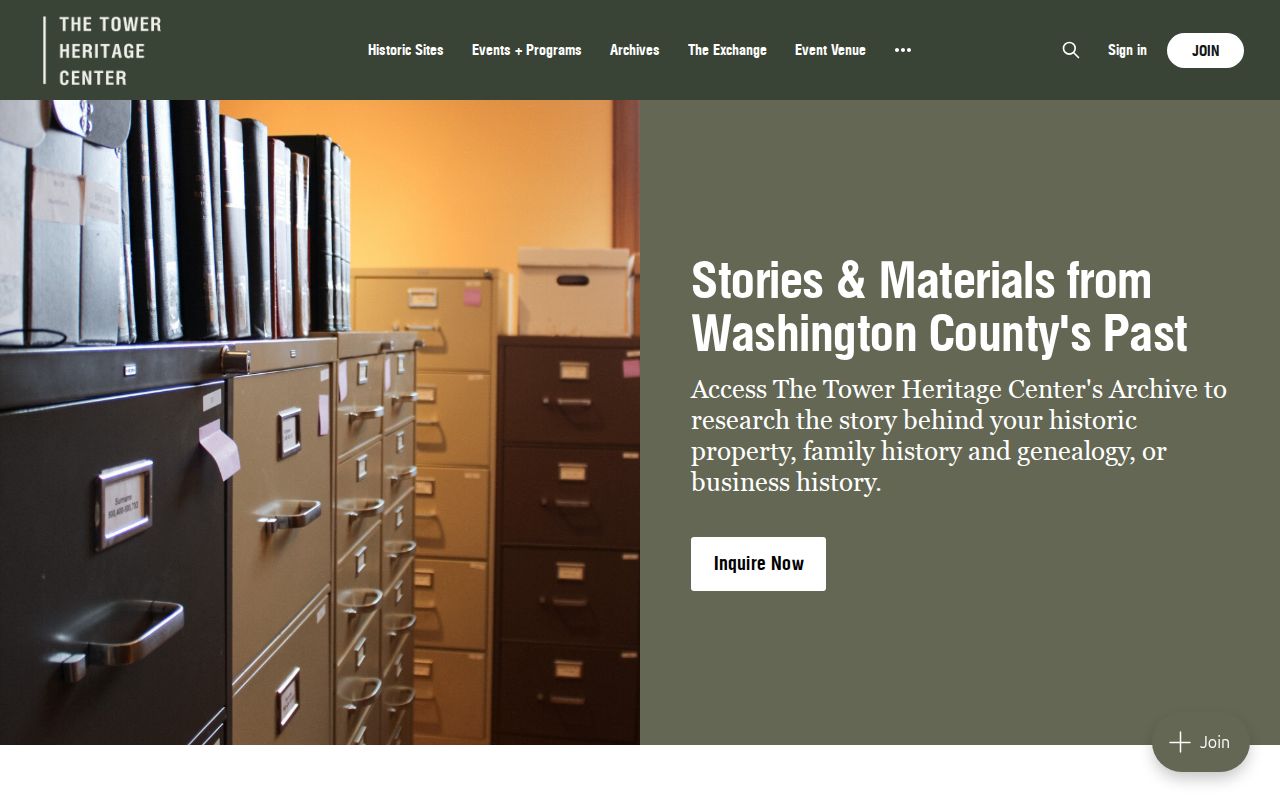
This archive layer can supply the second source that an incomplete printed listing needs.
Map West Bend Directory Clues
Polk's Wisconsin State Gazetteer and Business Directory is documented for 1891–92, 1907–08, and 1921. These editions can identify firms, occupations, and business people, but they are not complete household city directories. Plat books add landowners and roads. The 1859 county map supplies township and range, roads, rail, water, named owners, and a “Westbend” inset.
The November 1884 West Bend Sanborn map has two sheets. It shows buildings, businesses, street widths, construction material, hydrants, water mains, and fire-risk detail within the mapped district. Use it to place a printed business or address on a block, then compare later phone books and deeds. Additional West Bend Sanborn years are cited in local bibliographies, but each official item should be verified before claiming coverage.
West Bend Directory Access Tiers
Historical research crosses several access tiers. The library catalog and reference desk help locate phone and county books. Tower offers a free reading room and paid staff work. Wisconsin Historical Society records provide digital maps and abbreviated pre-1907 index entries, with fuller microfilm or copy procedures. LandShark offers a free name search but charges for recorded-document images. No one route covers every decade or record type.
| Route | Best use | Access limit |
|---|---|---|
| Library | Phone books, county directories, plat books, catalog help | Confirm exact year and shelf status |
| Tower | Community, property, family, newspaper, and archive files | Limited reading-room hours or research fee |
| WHS | Maps, AHI records, pre-1907 vital index and microfilm | An index entry may not include a full record image |
| Register of Deeds | Recorded land chain and historic plats | Images cost money; paper books face a current construction gap |
Trace West Bend Family History
Build a family trail from dated entries, not from an assumed continuous series. Start in the latest useful county directory, move back through the earlier publisher's run, and then use phone books. Census schedules provide household snapshots at released census dates, while deeds, vital records, probate, obituaries, and church or cemetery files test relationships. The federal 72-year release rule controls public population schedules.
- Start with a known person, address, and approximate year. Record spelling variants and former surnames.
- Search the Polk county run from 1995–2010, then Johnson volumes from 1969–1992. Note missing years.
- Continue through the 1930–1995 phone books. Save the exact listing and publication date.
- Pair a nearby released census year with the directory clue. Compare age, relationship, birthplace, and occupation.
- Confirm the family through WHS vital indexes, county or state certificates, obituaries, probate, church, cemetery, and deed records.
Wisconsin Historical Society Name Search can refine obituary, newspaper clipping, birth, marriage, and death materials by year, type, and county. Pre-1907 entries may provide only a date, county, volume, page, and microfilm reference. Later certificates route through the Wisconsin Department of Health Services or Washington County Register of Deeds with identification and eligibility rules. A missing directory entry means “not found in that source,” never proof that the person left West Bend.